Polecat -
any of several weasellike carnivores of the family Mustelidae (which
includes the weasel, mink, otter, and others). The pelt, especially of
the European polecat, is called fitch in the fur trade.
The European, or common,
polecat, also called foul marten
for its odour (Mustela, sometimes Putorius, putorius),
occurs in woodlands of Eurasia and North Africa. It weighs 1–3 pounds and is 14–21 inches long exclusive of the bushy
tail. Its long, coarse fur is brown above, black
below, and marked with yellowish patches on the face. Much lighter fur
distinguishes the masked, or steppe,
polecat (M. p. eversmanni) of Asia.
Principally terrestrial, the
polecat hunts at night, feeding
on small mammals and birds. It also eats snakes, lizards, frogs, fishes,
and eggs. The polecat is more
powerful than the marten but less active, and it rarely climbs trees.
Its litters of three to eight young are born in the spring after about
two months' gestation.
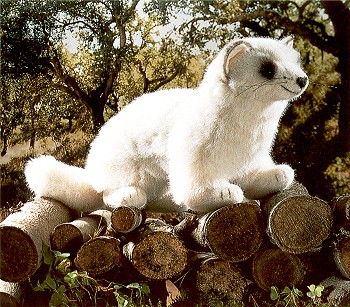
The domestic, albino variety of the European polecat is known as the ferret.
The marbled
polecat (Vormela peregusna) of Eurasian foothills and
steppes is similar to the European species in habits, appearance, and
size. It is mottled reddish brown and yellowish above, blackish below.
The zorille, a related African
carnivore, is also called striped, cape, or African
polecat. In the United States
the name polecat is often
applied to skunks (see skunk), particularly the spotted and
striped species.
"polecat."
Encyclopædia Britannica.
2006.
Encyclopædia Britannica Premium Service.